Persistent world

A world that remembers

Settlements, stock, people and discoveries exist as game state. What you use, lose or learn remains part of your world.

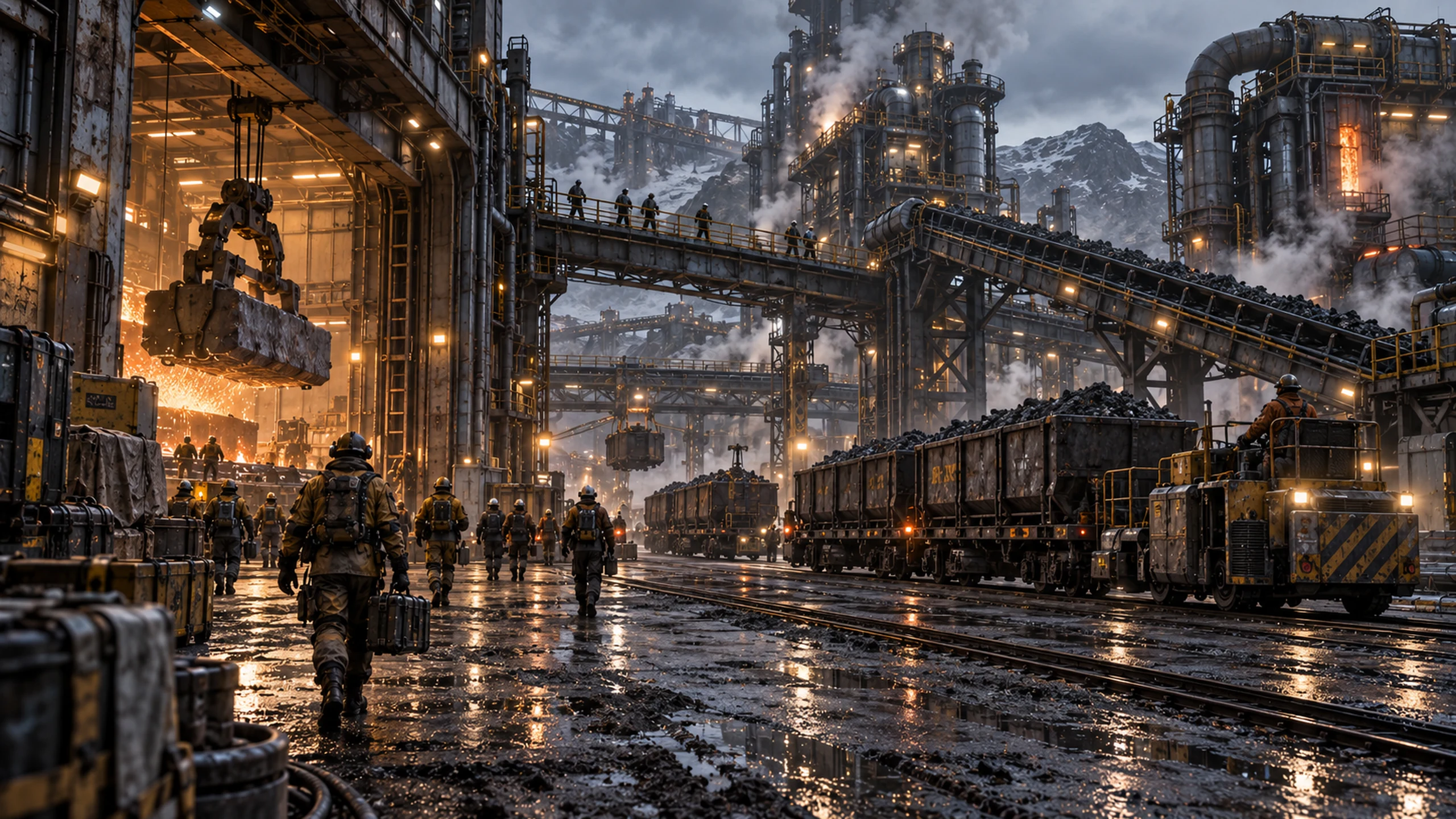
A lone traveller approaches a rain-wet industrial settlement in a mountain basin.

What this means for your play

Choices with practical meaning.

A settlement is not a paragraph that changes whenever you ask another question. Its people, services, resources and history are recorded by the game. The next decision starts from what actually exists.

Make plans against a real world

If a settlement has one suitable specialist, you have one possible local provider, not an unlimited pool of experts. If a component is elsewhere, reaching it becomes a real task. Supply, services and location give your choices practical meaning.

Keep the history you created

Owned items stay owned, consumed materials stay consumed and an unresolved fact stays unresolved. The world can remember an NPC, a changed relationship or an earlier shortage long after the conversation moves on. Continuity comes from recorded state, not the narrator guessing what happened.

In depth

How it works.

Follow the part that interests you. These systems continue to matter as your character and operation grow.

The RPG exists underneath the AI.

CYBERTECH is not a chatbot pretending to be a game. The AI narrator does not decide whether you succeeded. It does not decide how many resources exist. It does not invent an item because the next scene needs one. It does not award a qualification you failed to earn. It does not make an NPC know something they were never told. It does not turn a failed mission into success because the story would be easier that way.

The game systems determine the result first. That result becomes authoritative game state. Then AI turns that truth into natural narration, dialogue and guidance. The narrator tells you what happened. CYBERTECH decides what happened.

What exists, exists.

CYBERTECH maintains an authoritative world. If a settlement has one specialist capable of performing the work you need, there is one. If a component exists at another location, you may have to travel there to get it. If only 40 kilograms of material remain after a failed recovery operation, the game has 40 kilograms. A later mission cannot magically find 50 because that would be convenient.

If an organisation has spent its available funds, it cannot continue paying simply because the player needs money. If a machine has passed its maintenance interval because too much world time elapsed, it needs servicing. If monitoring never happened, the data does not exist. If you failed to qualify, you remain unqualified until you legitimately earn that qualification later. CYBERTECH does not protect the preferred story from the consequences of the game.

The story emerges from those consequences.

Settlements are game state, not scenery.

A settlement is more than a generated paragraph. CYBERTECH can establish and record what is actually there.

  • Businesses.
  • Institutions.
  • Specialists.
  • Services.
  • Resources.
  • Equipment.
  • Facilities.
  • Organisations.
  • People.
  • Local availability.

If a service is not present, the narrator cannot simply invent it because the player asks. If a resource is exhausted, it remains exhausted until a legitimate new source appears. Where you are matters because what exists there matters.

171 specialist generators working underneath the game.

CYBERTECH does not rely on one AI model to invent the world from scratch every time the player asks a question. A large specialist generator architecture operates underneath the game. These generators support the creation and selection of structured game content across the world. They can feed authoritative information into the runtime, where it becomes persistent game state. That allows CYBERTECH to support enormous variety without surrendering the world to arbitrary AI improvisation.

  • The generators build the game world.
  • The runtime records it.
  • The AI narrator presents it.

Generated does not mean made up on demand.

The difference matters. An AI-generated sentence can disappear when the conversation changes. CYBERTECH's generated game information can become persistent reality. An NPC can continue to exist. A settlement can retain what was generated for it.

  • A resource can remain consumed.
  • An item can remain owned.
  • A fact can remain unknown.
  • A relationship can change.
  • A consequence can survive dozens of missions.

That is how procedural variety becomes part of a persistent RPG rather than temporary story text.

Realistic consequences without turning the game into paperwork.

  • CYBERTECH's realism is based on cause and effect.
  • Resources remain consumed.
  • Money comes from somewhere.
  • Work takes time.
  • Experts are required for expert work.
  • Distance requires travel.
  • Technology has requirements.
  • Organisations have limits.
  • Failures have consequences.
  • Knowledge has to be acquired.

The game does not need to simulate every bolt and wire to make the world behave believably. The realism comes from the fact that actions have consistent consequences.

A concrete example

A recovery leaves 40 kilograms

A failed recovery leaves only 40 kilograms of material. A later project needs 50. The game does not quietly add the missing 10. You must source a legitimate replacement, revise the project or find a different material chain. A past outcome has become a new piece of gameplay.

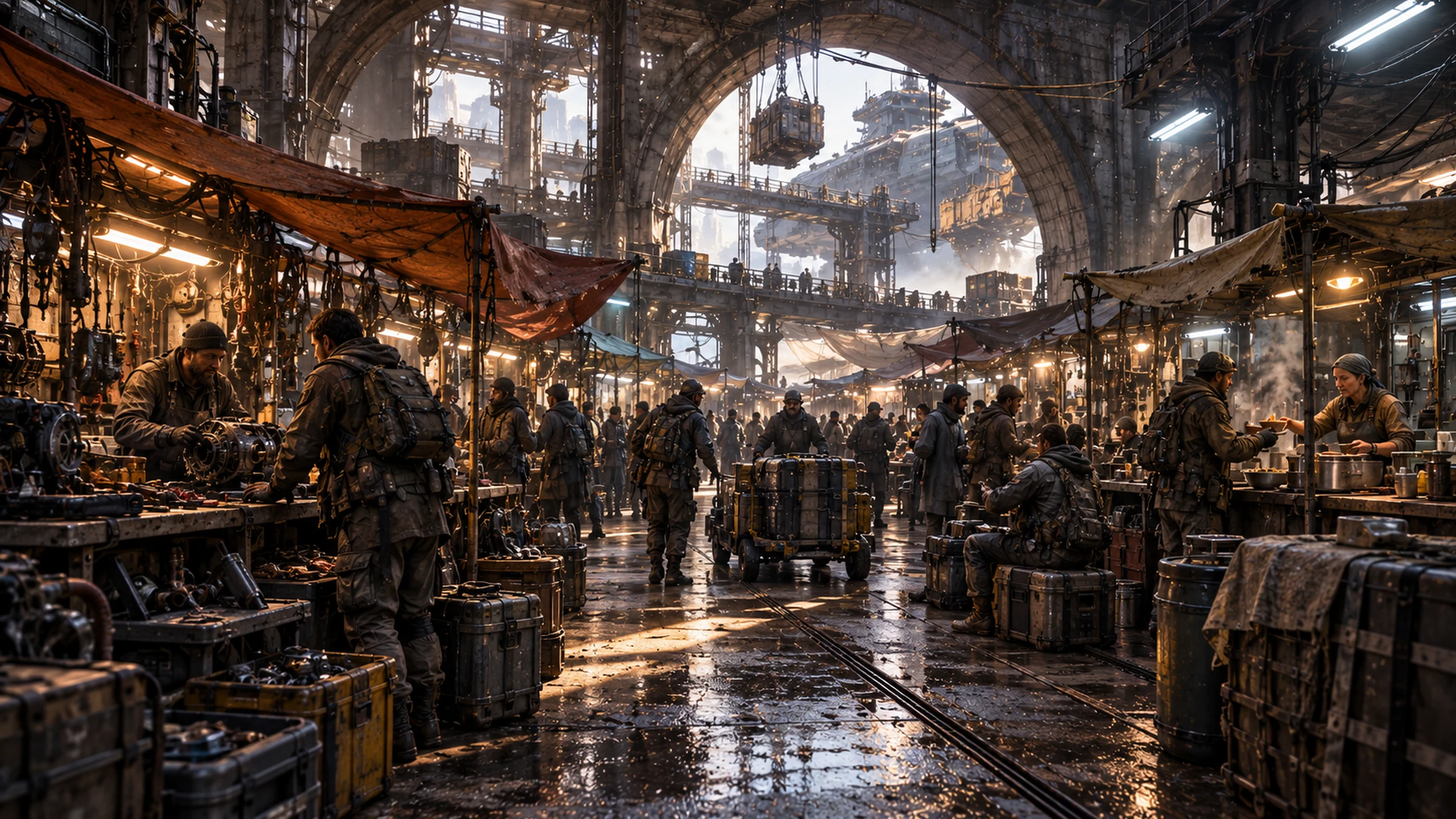
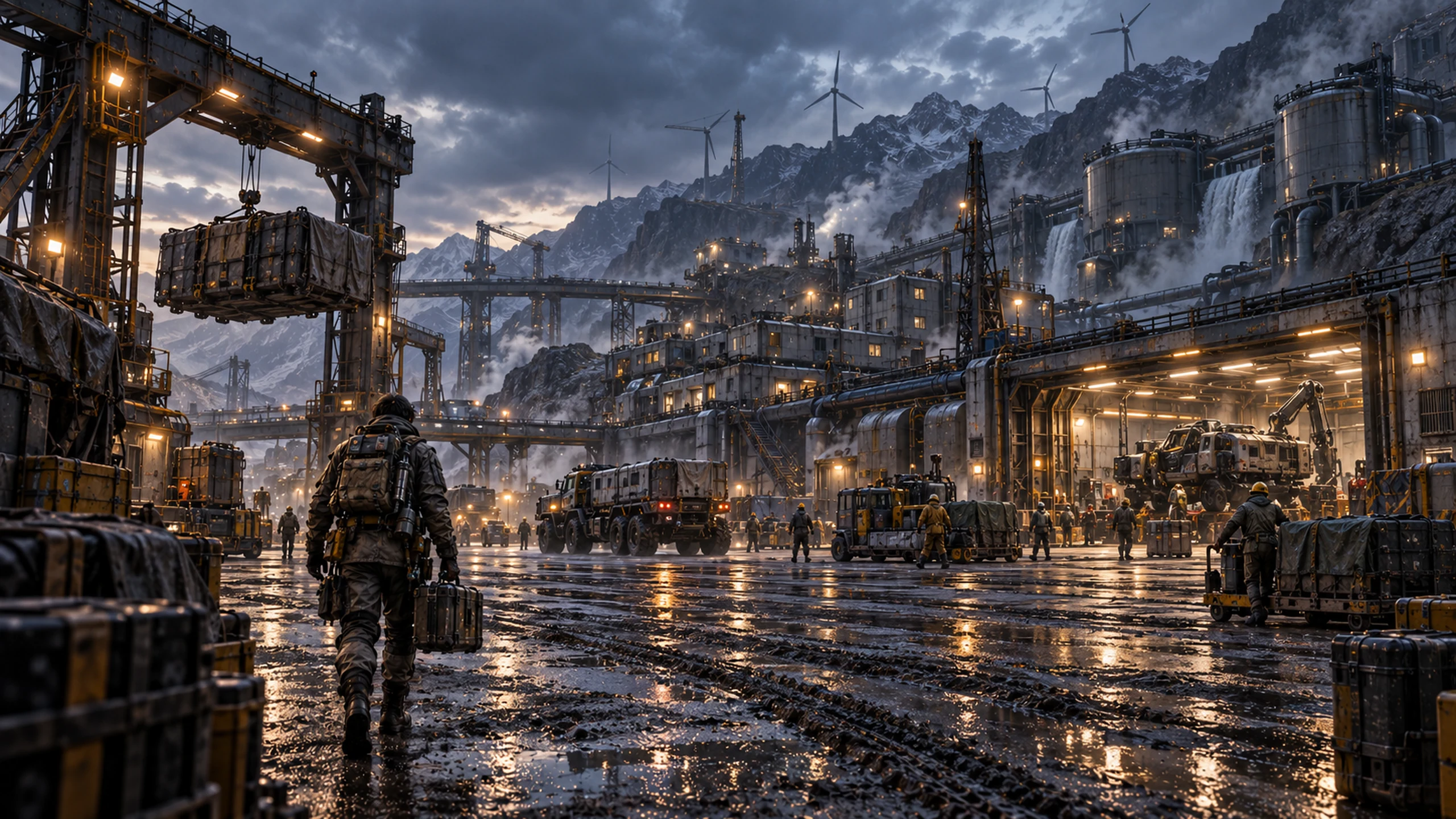
Workers and freight vehicles move between heavy industrial buildings.
Cybertech scene illustration: Workers and freight vehicles move between heavy industrial buildings.
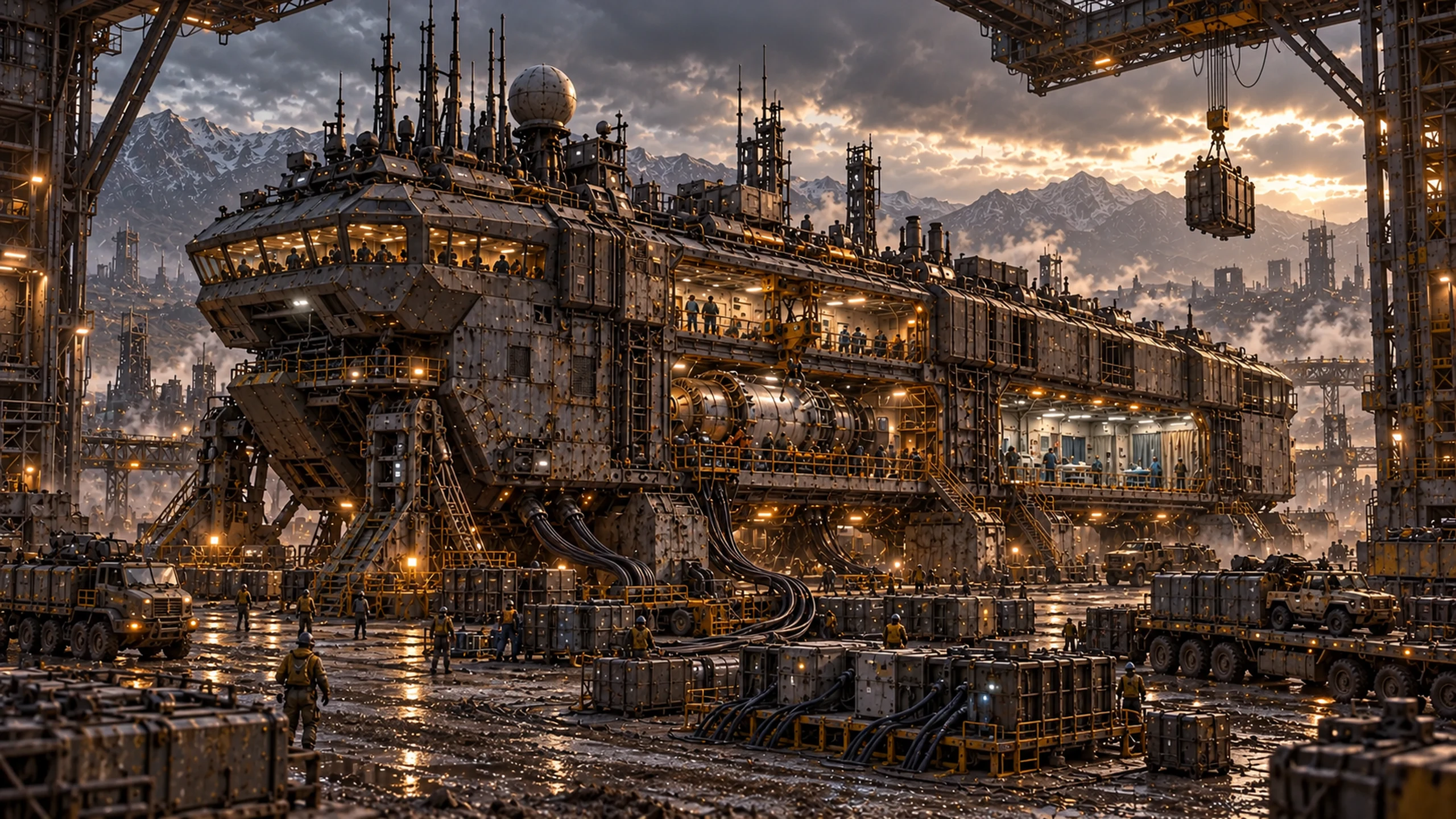
An expanded Command Carrier receives new modules in a vast service dock.

Continue in VISINVOKE

One character.
A world of possibilities.

Create a free VISINVOKE account. Review CYBERTECH access in your account and begin your own continuing science-fiction journey.

Create a free VISINVOKE account